While no one really understands economics, everyone knows they have to pay more than what they get is worth. Why?
What is economy?
Originally “economy” simply means “household management”, from the Greek: oikonomia. Today it is an overly aggressive global economy that imposes its code of conduct on the family, on the household.
Table of Contents
MISAPPROPRIATION
We ought to remind how, in the human imaginary, the house is associated with the woman, her body having been our first habitat before our birth.
We are beginning to see how even here patriarchy has unduly appropriated what does not belong to man.
We see in the economy itself the beginning of a turnaround. To trace it, we will analyze the very foundations of the economy.
ECONOMY: THE GREATEST ILLUSION
Let’s start with the most common thought. What do we think of first when we say: “economy”? We think about the money.
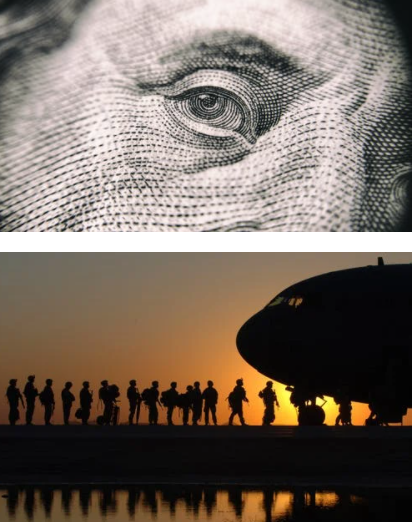
The most logical question to ask is therefore: “What is money in reality?” The most widely held opinion is that money represents the highest materialistic object. Do you really believe it?
Money is a symbol. Not the banknote, not the bankcard are of value. They simply refer to what in reality contains value.
You don’t eat money, you don’t kiss money, you don’t have sex with money. There is nothing material in it.
Rather than taking what I produced with me and trading it with what I need, I take money with me, or the Bank card.
Is money somehow a means of transportation? something like a car? Not even that: you are literally whisked from one place to another by car, while the money does not transport you from one point to another to collect your goods. If the car is a material item, the money certainly is not. What is money after all?
Money is a Symbol
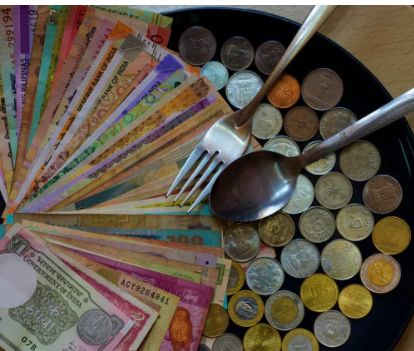
It is not the banknote, nor the bank card that is valuable. They are just symbols.
As already mentioned, instead of taking what I produced with me and exchanging it, I take cash, or the bank card: symbols.
All is well for both of us: the buyer and the seller, only as long as we value money equally and, more fundamentally, we agree that what is important, what matters, is what gets traded by money, not the money itself.
Simply put, if we didn’t have production: zero production, then the symbols of production: banknotes and bank cards would have zero value. So far so good.
The Twist

What would happen if someone said: I didn’t produce anything, despite that, you owe me everything you have because I have the symbol?
The patriarchal man is so obsessed with the symbol: money, that he forgets it has no value except insofar as it represents reality. It must be emphasized again that once reality is damaged, the symbol no longer has any value. Take an example: the flag. What about the flag of a country that no longer exists? Now the patriarchal man is playing with the sheet and asking for the return of the country he himself destroyed, simply because he draped it. It goes without saying that this is an excuse to steal what is not yours.
It may seem venturesome to compare what happens in the world of economics with what happens between men and women, just remember the original meaning of the word “economy” and the connection between the two won’t look strange anymore.
In the same way as in patriarchy, the man, under the pretext of representing the woman, he destroys her values, https://wonoman.com/is-artificial-intelligence-really-intelligent/#more-94 So does he claim to represent the whole world while replacing it with a virtual world, where he can pull the strings as he pleases.
To put it simply: what he wants to do with the economy is to replace the real with the virtual: the object with its symbol, in other words: authentic production with an empty financialization.
Such a process has taken place behind the scenes for a long time. It is in the economy as in the natural world: processes run under the surface, beyond the perception of everyone, until they – for example Volcanos – erupt one day. This is what happened in the economic world during the 2008 financial crisis which showed everyone how the economy is a game economy: artificial and unfair.
Gambling with Economy and Gambling with the Real World: Gambling with the Woman

The 2007/2008 recession resulted in so many people losing all of their income. Why did this happen? “Because of widespread failures in financial regulation,” it says officially. Which means in a directly transparent language: because of a robbery. The financiers stole you and used what did not belong to them: your money.
They don’t call it “theft”, which is an ordinary word recognizable by everyone, they call it “financialization”. Business commentator Grace Blakeley has published a book on such a phenomenon, with the title: “Stolen: How to Save the World from Financialization”.
The greatest gamblers are the ones that cannot come to terms with reality, they must therefore resort to a magical force that does the work for them.
They are content to operate on the symbol alone without worrying about what it refers to. they expect reality to adapt to the results obtained by their symbol sets . In other words, instead of creating the coin according to what is produced, they ask the productive forces, those human beings who really work, to adapt their pace of production to the games of the speculators: those who literally take the money out of your pockets without giving you anything in return.
All this while claiming that what they are doing: pure destruction, is a great creation, the fruit of a high specialization. https://wonoman.com/are-wars-inevitable/#more-620 The question is so complicated – they say – that only a privileged few in heaven are able to handle.
To avoid radical criticism, they even speak in terms of post-democracy, alluding to the fact that only the “chosen by God” are good decision makers.
Let us refresh our memories and recall how such an attitude, based on similar arguments, was used to prevent women from participating in decision-making, within the family and in society. Under all kinds of fallacious pretexts, the patriarchal man arrogates to himself the “duty” to represent the woman: It is far too complicated a task for her. She needs a specialist: the man.
What is a Good Economy?

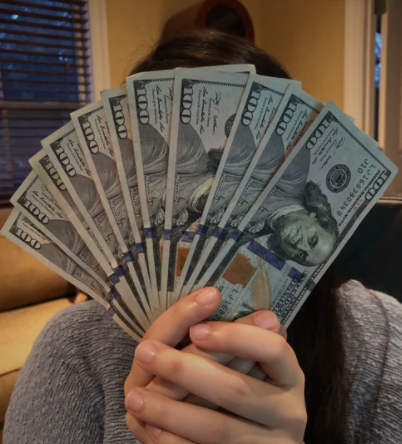
The economy, in order to function, must be based on the production of goods and services – this is a simple definition of economy. Yet over the past few decades economy has turned into pure speculation.
How did it happen? To put it simply, it started when men, who have already replaced humans with machines, in all possible areas of mechanics – building cars from A to Z with machines, for example – decided to introduce the power of the machine in a decision-making process. This is the case with the economy. To simplify the answer, they delegate their personal decision-making power to computers.
In the jargon, it is called: “high frequency trading” and is managed by sophisticated computers. We know that the stock market is what dictates all the basic rules of our economic life. Yet the end result of “high frequency trading” is the transformation of the stock market into a casino.
Fake Economy
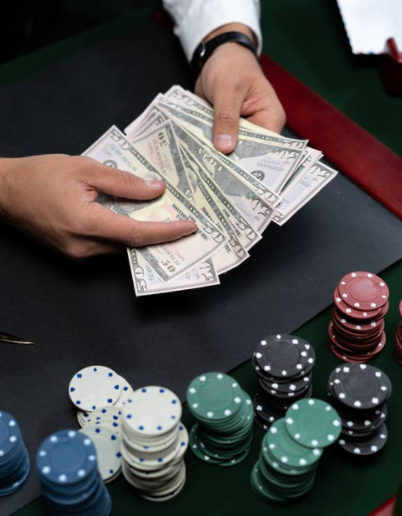
Why “fake” economy? Because the money earned is not invested productively, from which everyone would benefit – the most fundamental principle of capitalism: more jobs, more goods, more services, in short: more well-being.
It takes time and energy to organize, structure and develop relationships between people and thus bring something economically profitable to everyone.
The happy few, who have made big profits, do not want to be overloaded with “tedious” interactions. They prefer to reinvest their earnings in “computer games“, called “high frequency trading”, just like casino players.
The literature abundantly tells us what the end of addicted gamblers is: they lose everything. Unfortunately, this is not literature, it is the way the economy is run today. So what’s the end of the story? It’s very simple, it’s the answer to the question: who pays? We pay, the majority of people: the non-happy few.
Too big to fail, it was said in 2008, which simply means that those who ruin everyone rather than being imprisoned will instead be saved by the victims: the state and ordinary citizens who bank their money and believe that there is a safe place.
The banks play casino games with our money, and if they lose everything, they ask the state to save them. The state saves them: “too big to fail” and pays them back with taxpayers’ money.
Have the banks learned the lesson? Not at all: players are starting to play their Dirty Money games again. This is why we never recover from the financial crisis of 2008: the money given by the state is not invested in the real economy, which would stimulate production and thus lead to general prosperity. The money is invested in new, unfounded speculation.
Did the players ever distribute their money when they won? Never, the principle being: “privatize the profits and socialize the losses“.
In short, while Wall Street and London play the money game and have fun, the rest of the world must pay the worst consequences. All of this comes from forcing the real economy – real production – to turn into a fake, a fantasy.
By the way, it should be noted how Wall Street Stock Exchange Square was since the 18th century, designated by the New York Common Council as the official slave market – behind the wall were the slaves. The difference from past history is that now the slaves are not a small group of people, it is the whole world.
What is the basic Meaning of Democracy?
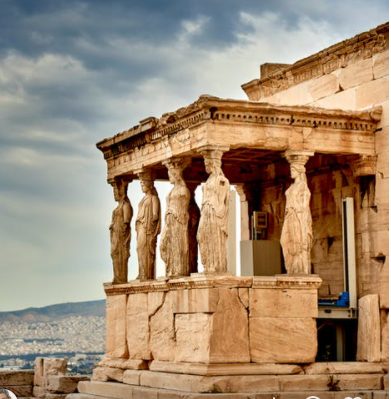

Democracy is government by the people. When democracy is not direct, representatives must follow the will of the people and act in the interest of the people, certainly not in their own interest or that of a small group of tycoons. This last case is exactly what we have been experiencing since financiers have taken control of power.
How do they present it? Of course, not like it really is, but rather by sleights of hand. To divert attention from the facts as much as possible, they resort to ideologies. Their favorite is the ideology of progress.
How do they instrumentalise the idea of progress? Insidiously: what comes after is supposed to be better than what was in place before. This is the basic idea. What they voluntarily neglect to say is that such statement is only valid if we advance on the path of good. If we advance on the path of evil, it won’t be a progress that we are facing, rather a regression.
In other words, our representatives take the only chronological aspect into consideration when presenting to us their decisions. They deliberately “forget” the qualitative aspect, which is in fact the turning point, because it determines whether the result will be good or bad. Finally, it is the quality that decides whether there will be progress or regression.
They don’t want us to notice it’s on the wrong track, they lead us. To wash their hands of all responsibility, they first impose on us the absolute dogma that what comes after is always better than what was in place before. If someone who killed one person at one time kills 10 at a later time, I challenge no matter who to talk about the progress in this case.
In the meantime, we are told: there is no alternative, which means that slavery, strongly condemned in principle, has indeed returned to the agenda under a new name, under a new mask: ” progress”.
Post-Democracy: a Fool’s Game to Deceive Us
We must “evolve” towards post-democracy – we are told – which actually means: anti-democracy.
Democracy is based on the idea that, of course, every individual needs respect, but rather than having ten thousand dissatisfied people, it is better to have only a thousand.
Post-democracy proposes to overthrow such a statute, admittedly not perfect – perfection is one hundred percent of people satisfied – and yet the least worse. Instead, they are proposing, actually, they impose the worst of all systems on us: a thousand satisfied, for nine thousand dissatisfied. Worse still: to make the smallest minority happy, the vast majority: us, must endure any kind of abuse and meanwhile be happy, because this goes hand in hand with progress. What comes after is always better than what was in place before. These are the “after” people, and therefore the most progressive.
If we oppose it, we are immediately sidelined. “Now you have to turn the page and let us, the happy few” – they implicitly say – “run the world”. To justify their incredible claims, they call themselves “specialists”.
The Myth of Democracy Specialists
Democracy is the life we share together in society. Without a doubt, there is no such thing as a life specialist; everyone can judge for themselves what is good and what is bad for them.
If a life specialist existed, it would undoubtedly be a woman, since she is the main source of life. In no case can the patriarchal man be one, whose main activity is the destruction of nature, life and ultimately women.
What is really happening is that we are the victims of a group of deceptive savages who believe that economics must be applied mechanically. We saw this same attitude when we spoke of “artificial intelligence”. Its ardent supporters believe that what is mechanical, what is artificial, what is non-human, it is better to say “anti-human” is better than human.
Last Stage of the Patriarchal Dictatorship
Even if the disastrous consequences of such a state of mind are everywhere tangible and visible to all, no one has de jure the right to question it. A taboo is imposed on whoever reports things as they are. As a French intellectual said: “What we see is not what we see and what we hear is not what we hear”. All this to prevent people from reacting, from looking for an alternative. “There is no alternative,” they say. However, when only one path is open, we all know what it means: dictatorship.
The foundation of it all is the very dogma on which the financial world is rooted, which contemplates eliminating everything that remains human from the economy.
Its real and final objective is to make human beings the instruments of the economy rather than making the economy instrumental to human beings.
In other words, financiers want to turn human beings: the epitome of quality, into quantitative items. Fortunately for us / unfortunately for them, they will never succeed: individuals are intangible units, qualitative in nature, they are autonomous beings who depend only on themselves.
Why such a Determination to Reduce the Human to an Object?

We can appreciate here again how the megalomaniac, patriarchal project works, which aims to replace nature, and everything that has to do with nature, with something artificial.
The reason is transparent: we use the expression “mother nature” and “mother earth” which reveals how much we identify the one “who” will nourish us throughout our life, with the one who did it first with her body: the woman, our mother.
By substituting what is natural with what is artificial, by substituting human beings with objects, the patriarchal man claims to become the only one, the absolute creator. Man can, in fact, produce any type of object, he cannot “produce” human beings.
How does Overconsumption affect the Economy?
Over-consumption kills the real economy – designed to meet real needs – by failing to provide the essentials and over-delivering what is superfluous.
Nowadays, everywhere, we are almost suffocated by objects. Why? because they are created by men to replace human beings, born of women. In other words, objects usurp the place made for humans.
Have we ever thought about the real implications of the term “human resources”, which we use so often? It is very revealing: it induces the idea that the human being is one resource among many others.
Another Myth: Economics is Objective
This is another myth to add to those we have already mentioned. This is the alleged objectivity of the economy. And this is fake news made on purpose to avoid the backlash of those who are heavily affected by the negative economic measures taken by politicians, who, in fact, are being held hostage by financiers.
Why such an attitude? If people in power say that the measures they take are objective because they are taken by “specialists” in the field of the economy, no one has the right to react, to reject them.
in other words, if measures are objective and not subjective: not depending on the opinion of those who take them, if they correspond to facts, then they must be followed passively by the people.
In reality, economics has less objective value than philosophy. We know that whatever we say or do comes from a specific way of thinking.
Yet economics never really shows its philosophical background: it tends not to reveal its basic thinking, leaving it to the intuition of the listener.
Philosophy, on the contrary, always does this: it explains exactly what the premises are and draws conclusions from them: theoretical and practical conclusions. Economists are, instead, very often silent about their thinking, from which they draw practical conclusions that concern each of us.
It is very unfortunate, it should be the opposite: the first to expose their way of thinking, should be the economists rather than the philosophers, especially since the practical consequences of the thought of the philosophers do not affect us on a daily basis. On the contrary, the practical consequences of the thought of economists affect us at all times. And don’t say economists don’t follow thought, because they just follow facts.
It is totally unrealistic to say that economics is rooted in facts and philosophy in ideas. Both have their origin in a mental attitude that guides you in choosing the facts that confirm what you think.
Let’s take a classic example used by anthropologists. Eskimos, who see many types of snow, find confirmation of their belief that there are many types of snow. We also find confirmation in the facts that there is only one type of snow.
In summary, the difference between economics and philosophy is that economics does not display its ideological premises, whereas philosophy says it from the start. Not surprisingly, economics hardly allows a free debate, under the pretension there is no need for it, because economics is objective.
Objectivity of Economics? A purely Subjective idea
There is nothing objective in economics, yet its actors continue to insist that the economic world is a mechanical world based on mathematical laws.

Apparently, these laws are of variable geometry, otherwise we would not be witnessing the wars that the different economic actors are fighting against each other in the field of the economy. No one so far has gone to war because he thinks 1 + 1 = 3, the other thinks 1 + 1 = 4, all agree that 1+ 1 = 2.
While they are waging a relentless war precisely because they think differently and accordingly act differently, they assume that they are simply sticking to facts. And that’s why they don’t need a debate about their thinking.
Unlike economics, philosophy is open to any kind of debate. Not only does philosophy allow it, but it also encourages debate to eliminate any possible contradiction, each new piece of philosophy begins with the demolition of a previous one. Philosophy does not claim to be objective: aware of being the product of a subject, philosophy knows its limits, which is not the case with economics.
Double Game

Economics insiders know it however pretty well, which is why they fight all the time just to impose their own way of thinking on everyone else.
There is nothing more subjective than the eternal struggle to impose your point of view. The end of the dispute remains the same. Whoever wins imposes his point of view about the object.
There is nothing material in it: it is the thought at the beginning and the thought that ends: the thought guides the whole process. He who wins forces his own thought on the vanquished.
While economists claim to follow facts and not ideas, they also support the view that money is material in nature.
In reality, the economy focuses on money, the least material “object” because it is a symbol, even more: it is a universal symbol: the more expansive, the less tangible: the least material.
If money had something of an object as people would like to think, the economy, which puts money at its center and builds its entire structure on it, would be the same everywhere. The sun is the same everywhere, no argument about it. This is not the case with economics: economy varies from culture to culture. There are even several, mostly opposing variations within one and the same cultural environment.
The paradox of the stock market: people act purely according to their thoughts.

What is the value of money? It is what people think of money.
The Stock Exchange works with no reference to anything concrete, not even to gold since the seventies.
And as mentioned above, the financialization of the economy consists in the shift from industrial capitalism to financial capitalism. The latter enables business leaders to gamble with money as they would with casino cards. What is concrete in casino games? Nothing.
We can see how far the patriarchal inversion of values goes as the economy shifts from the real to an imaginative world: the world of gamers. What is the purpose of each of these players? Win over all other players, be stronger than them. How? By weakening and destroying them.
From Game to War: WELFARE OR WARFARE ?
Again we face war, because in order to win the economic competition one is prepared to use all means: It is the Economic Warfare. In fact, it could use both military and political operations. The definition of war given by Clausewitz: “War is the continuation of politics in a different way”, which looks so shocking at first sight, seems to fit perfectly with the description of the world in which we live.
To cut a long story short: we are facing a final battle where quantity claims to be able to prevail against quality. It reminds of Charlie Chaplin’s old evergreen film “The Great Dictator” which shows the dictator’s constant obsession with finding a new weapon to win over all his opponents. Every new weapon fails while the great dictator starts over and over again just like Sisyphus.
Final words


The world of quantity is the patriarchal world par excellence: it is that of objects, it is the world where man feels safe: because he can create and destroy things as he pleases.
It is a world where, if the woman enters, she herself becomes an object: she is destroyed or self-destructs. It is time for the woman to intervene. It is time for feminine values to take over, which is precisely the goal of 21st century feminism.
The imposition of quantity – the specificity of man-made objects – on quality – the very nature of human beings – will never succeed because quality is the essence of all that is alive, and yet the quantity is inferior quality.
It is time for the woman, capable of achieving the highest quality, to step in and take the helm of a drifting boat.
Like what you see ? Join the conversation ! Details can be found by clicking here https://wonoman.com/contact/

